Cambridge International · IGCSE · English Literature
Unseen Critical Commentary
The Unseen Critical Commentary is your opportunity to demonstrate pure analytical skill without the pressure of memorisation. By mastering close reading and the PETAL framework, you can unlock any poem or prose extract and craft a sophisticated, high-scoring response.
- 5 min read
- 2 worked examples
- 2 practice questions
- 8 key terms
Study Notes
Overview
The Unseen Critical Commentary is a cornerstone of the Cambridge IGCSE English Literature paper. Unlike set texts where you rely on prepared knowledge, the unseen section tests your raw ability to read closely, think analytically, and articulate a personal, informed response to a text you have never seen before. Examiners are looking for candidates who can confidently deconstruct a poem or prose extract, identify the writer's craft (language, form, and structure), and evaluate how these choices shape meaning and affect the reader. It is not about finding the 'right' answer, but rather building a coherent, evidence-based argument about how the text works.

Core Analytical Approach
Approaching an unseen text requires a systematic method. Your first reading should focus on establishing the overall meaning, mood, and narrative voice. Subsequent readings should drill down into the specific techniques the writer uses to construct that meaning.
The PETAL Framework
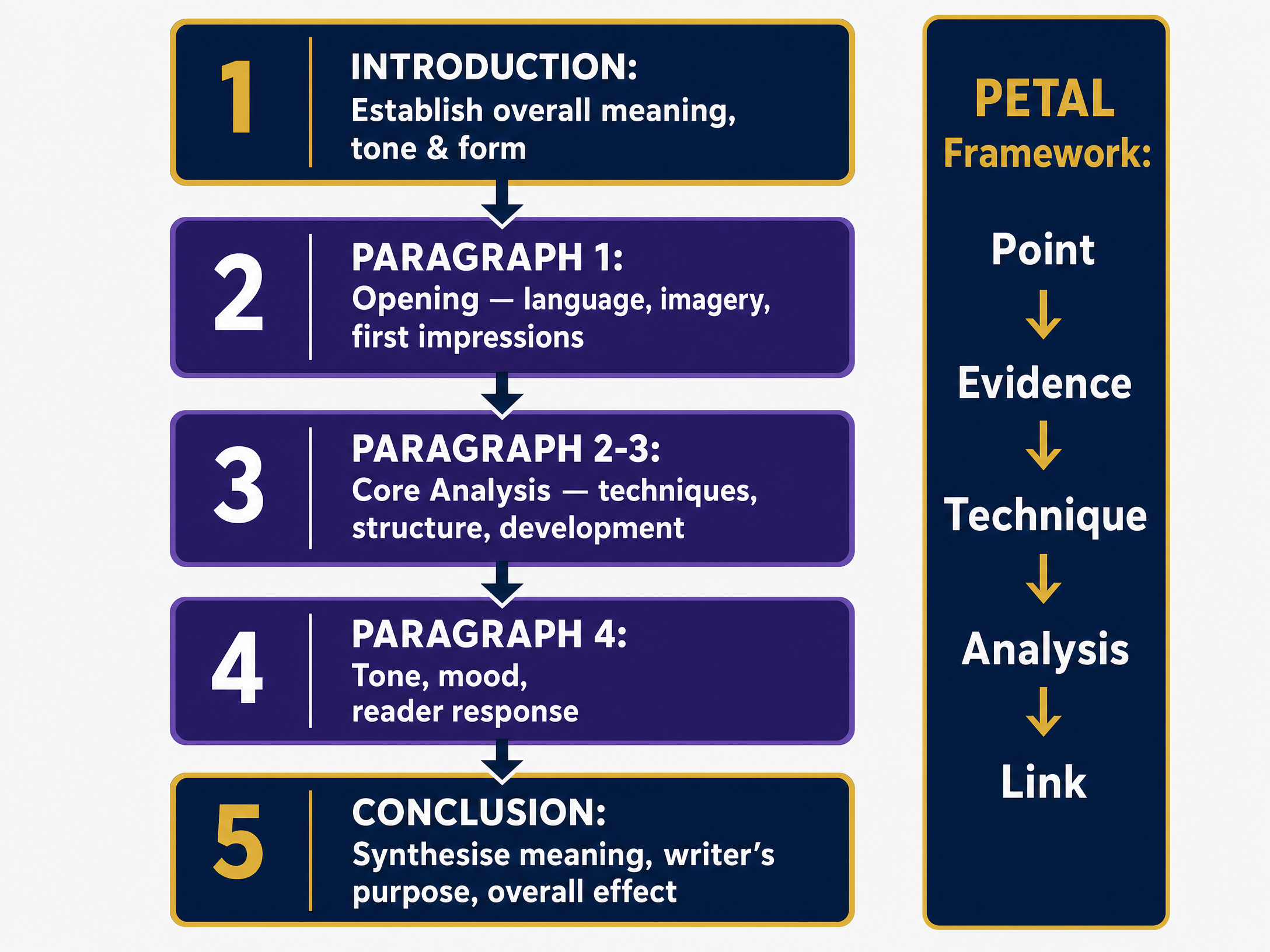
To ensure your analysis is rigorous and meets the demands of Assessment Objective 2 (AO2), structure your paragraphs using the PETAL framework:
- Point: Make a clear interpretive claim about the text.
- Evidence: Provide a short, embedded quotation to support your claim.
- Technique: Identify the specific literary method used (e.g., metaphor, enjambment).
- Analysis: Explain how and why this technique creates a specific effect or meaning.
- Link: Connect your point back to your overall argument or the text's central theme.
Analysing Writer's Methods
Examiners heavily reward the precise identification and perceptive analysis of literary techniques. You must move beyond 'feature spotting' (simply naming techniques) to evaluating their impact.
Language and Imagery
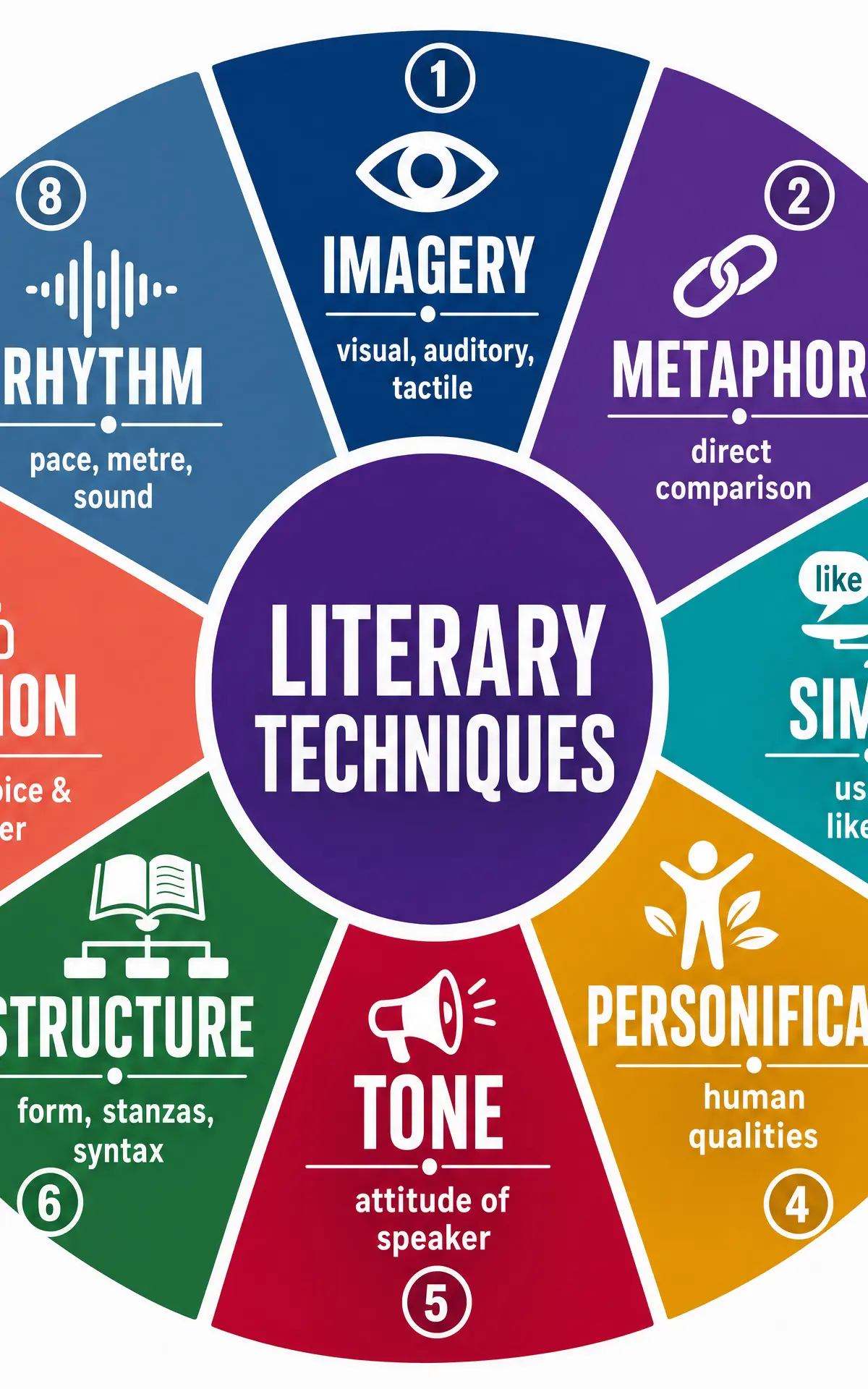
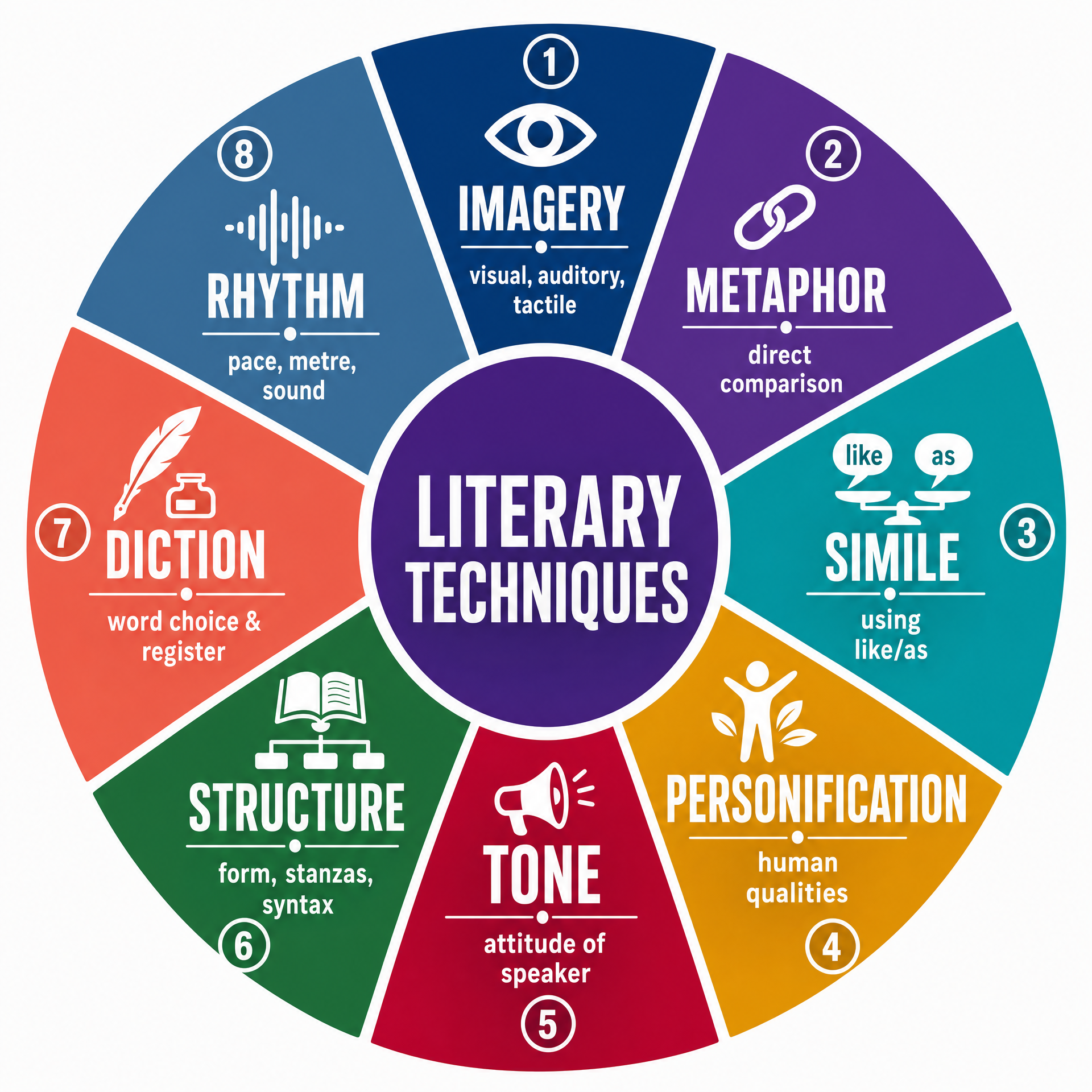
Consider the writer's diction (word choice) and the semantic fields they create. How do specific verbs, adjectives, or sensory images (visual, auditory, tactile) shape the reader's understanding of the subject?
Key Focus Areas:
- Metaphor and Simile: How do comparisons reveal hidden layers of meaning?
- Personification: What is the effect of giving human qualities to inanimate objects or abstract concepts?
- Sound Devices: How do techniques like alliteration, sibilance, or assonance contribute to the text's atmosphere (e.g., creating a harsh, soft, or sinister tone)?
Form and Structure
Structure is often overlooked by candidates, making it a powerful way to stand out and access higher marks.
In Poetry:
- Stanza Form: Is it regular (suggesting order, control) or irregular (suggesting chaos, fragmentation)?
- Enjambment and Caesura: How does the flow or interruption of lines dictate pace and reflect the speaker's emotional state?
- Rhyme and Metre: Does a consistent rhyme scheme create a sense of inevitability, or does a broken rhyme scheme highlight disruption?
In Prose:
- Narrative Perspective: Is it first-person (intimate, subjective) or third-person (omniscient, detached)?
- Pacing: How do sentence lengths (short/staccato vs. long/complex) build tension or reflect a character's thought process?
- Focus Shifts: How does the narrative move from the general setting to specific details, or from external action to internal reflection?
Structuring Your Commentary
A logical, progressive structure is essential for a coherent argument.
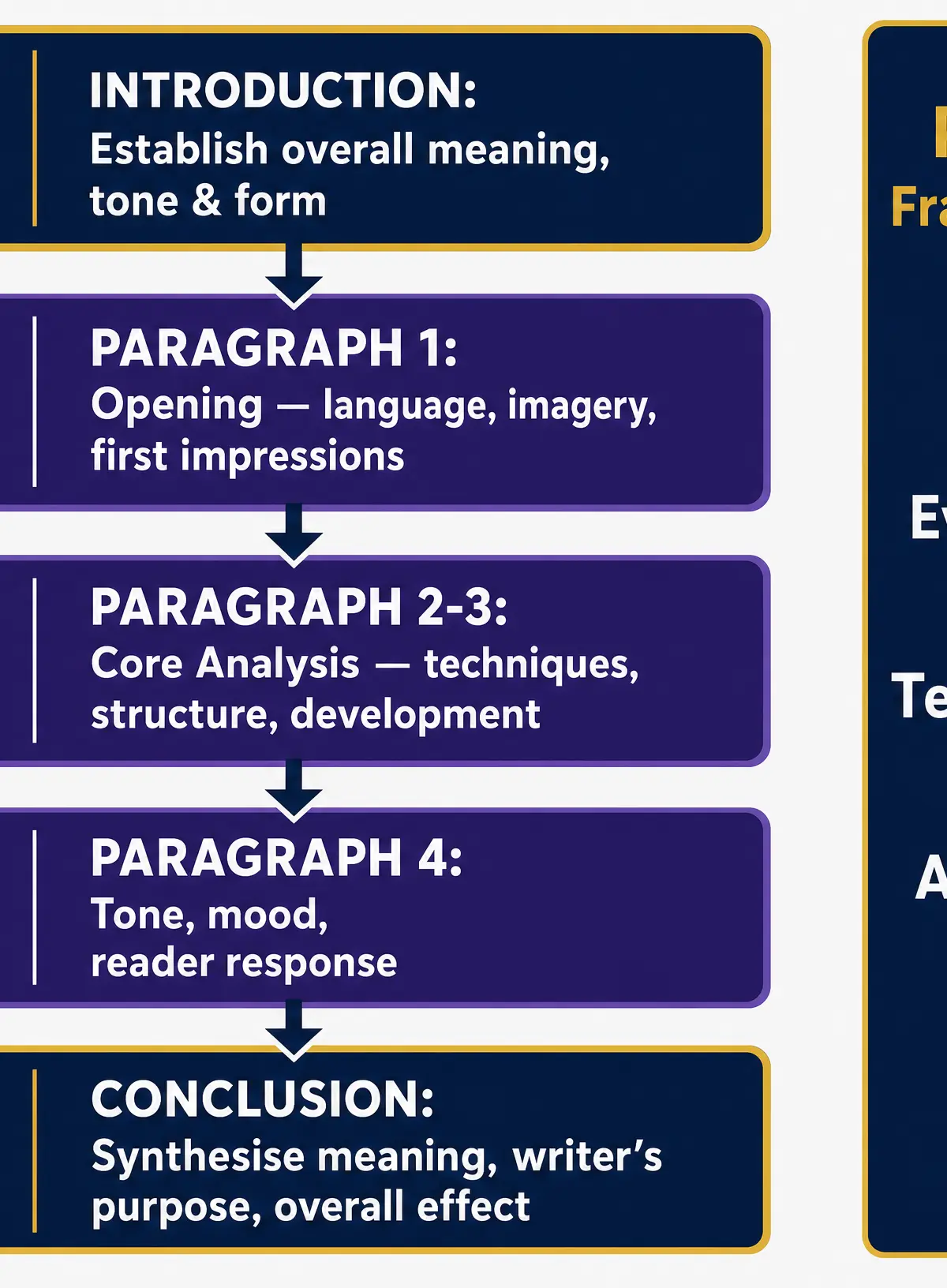
- Introduction: Briefly state the text's overall subject, its prevailing tone or mood, and your central interpretive thesis.
- Body Paragraphs: Use PETAL to explore different aspects of the text (e.g., one paragraph on opening imagery, one on structural shifts, one on narrative voice). Ensure smooth transitions between paragraphs.
- Conclusion: Synthesise your findings. What is the writer's ultimate purpose, and what is the final impact on the reader?
Context and Personal Response
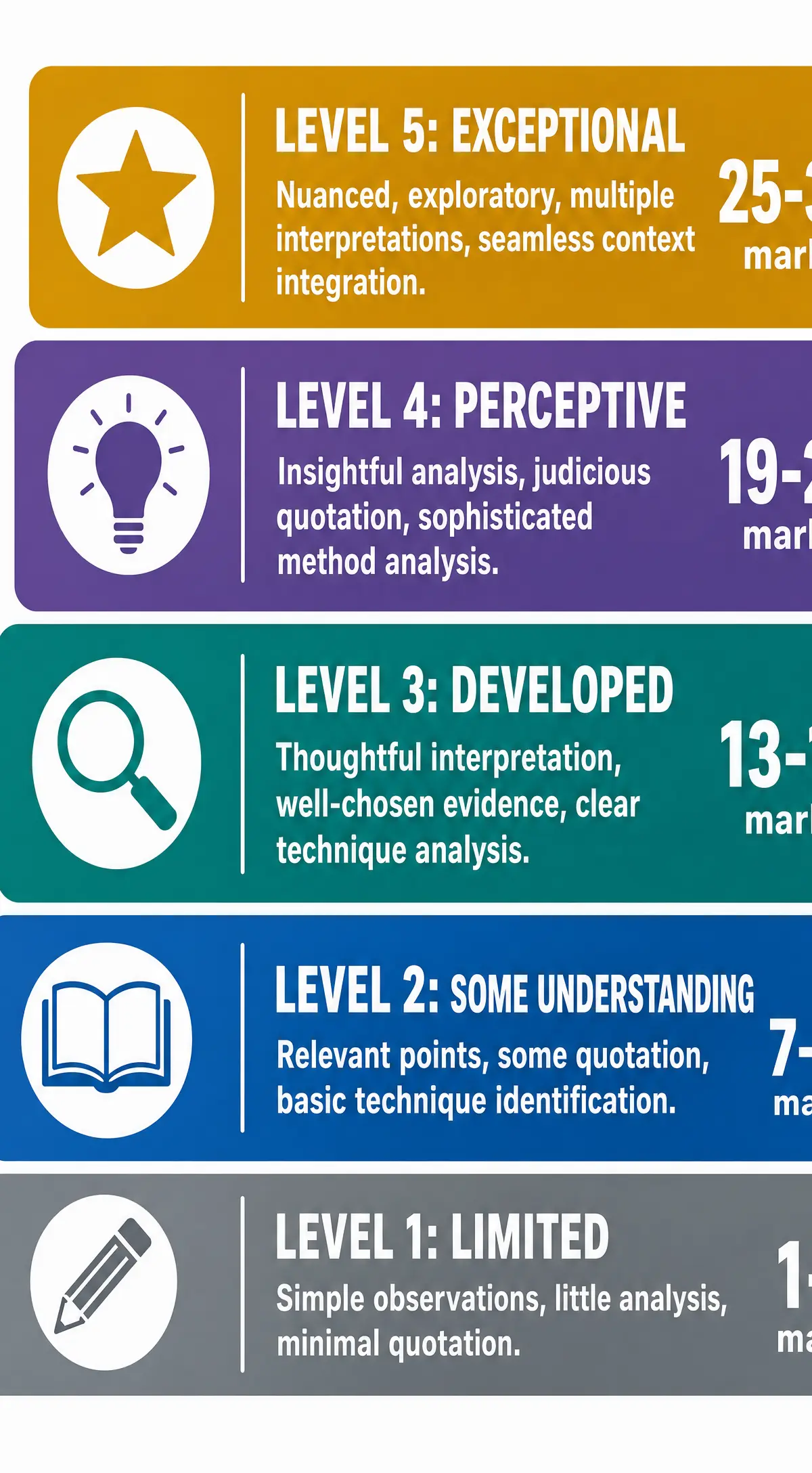
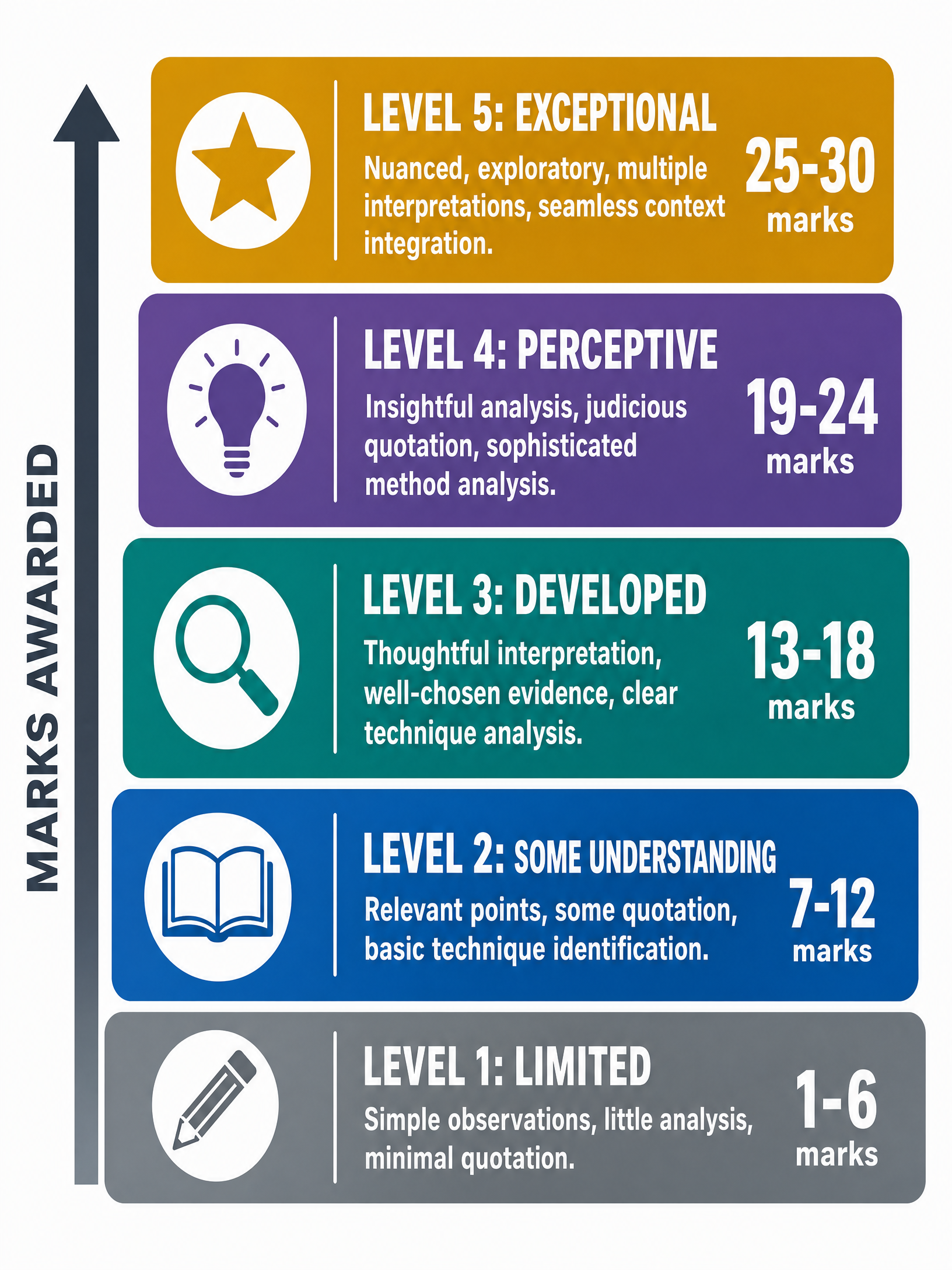
While the text is 'unseen', you must still demonstrate a perceptive personal response (AO1). This means offering an interpretation that goes beyond the literal meaning. For Level 5 marks, explore ambiguities—where a word or image might have multiple valid meanings—and acknowledge the complexity of the writer's craft.
Visual Resources
3 diagrams and illustrations
Interactive Diagrams
1 interactive diagram to visualise key concepts
Conceptual Flow Outline
The Unseen Commentary Workflow
Worked Examples
2 worked examples — open one to explore the question and available guidance.
Practice Questions
Test your understanding — click to reveal model answers
Read the unseen poem provided by your teacher. How does the poet present the relationship between the speaker and the natural world? (25 marks)
Hint: Look for shifts in tone. Does the speaker feel dominant over nature, or intimidated by it? Track how the imagery changes from the first stanza to the last.
Read the unseen prose extract. How does the writer make this moment so dramatic for the reader? (25 marks)
Hint: Drama in prose is often created through pacing. Pay close attention to sentence lengths, the use of dialogue, and how the writer manages the release of information.